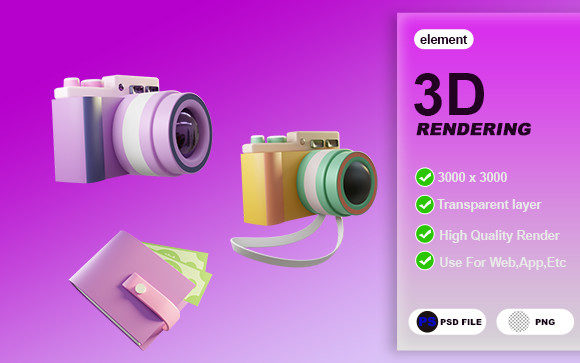
Element Rendering Object and 3D Icon Element Rendering for Digital Design
The integration of Element Rendering Object (ERO) and 3D icon element rendering has become a cornerstone in modern digital design, offering creators and developers powerful tools to enhance visual communication across web and app interfaces. These technologies allow for the seamless incorporation of high-quality 3D assets into projects, ensuring clarity, depth, and engagement without compromising performance.
One of the primary advantages of ERO is its ability to render complex elements efficiently, reducing the need for heavy file sizes while maintaining visual fidelity. This makes it particularly useful for applications where speed and responsiveness are critical. When combined with 3D icon element rendering, designers can create dynamic, interactive elements that stand out in a competitive digital landscape.
Understanding Element Rendering Object
Element Rendering Object refers to a framework or system that enables the efficient rendering of graphical elements within a digital environment. It works by optimizing how objects are displayed, processed, and manipulated, which is especially important when dealing with complex visual components like 3D icons. This approach ensures that even intricate designs remain lightweight and compatible with a wide range of devices and platforms.
For professionals working on web or mobile applications, ERO provides a streamlined workflow. By leveraging this technology, developers can focus on functionality and user experience without worrying about the performance overhead of high-resolution graphics. The result is a more polished and responsive interface that enhances user interaction.
3D Icon Element Rendering: A New Dimension in Design
3D icon element rendering brings a new level of realism and interactivity to digital design. Unlike traditional 2D icons, 3D elements offer depth, texture, and perspective, making them ideal for creating immersive user experiences. These icons can be rotated, scaled, and animated, allowing for greater flexibility in how they are used across different platforms and screen sizes.
Designers often use 3D icon rendering to differentiate their work from standard flat designs. The added dimensionality not only catches the eye but also improves usability by providing visual cues that help users navigate interfaces more intuitively. Whether it's for a mobile app, a website, or a digital dashboard, 3D icons can significantly enhance the overall aesthetic and functionality of a project.
Practical Applications of 3D Icons and ERO
The combination of 3D icon element rendering and Element Rendering Object opens up a wide range of practical applications. In the realm of web development, these technologies are used to create visually striking landing pages, interactive product showcases, and engaging user onboarding experiences. For app developers, 3D icons can be integrated into UI components to provide a more dynamic and responsive feel.
Business owners and marketers benefit from these tools by being able to present their products or services in a more compelling way. High-quality 3D icons can be used in advertisements, social media content, and promotional materials to capture attention and convey brand identity effectively. The ability to customize and animate these elements adds an extra layer of creativity and engagement.
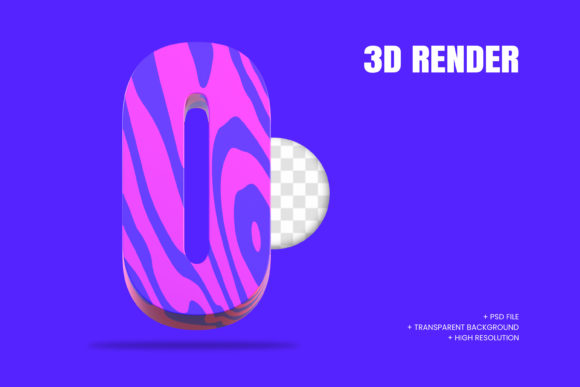
Advantages of Using HD 3D PSD Files and PNGs with Alpha Background
When working with 3D icons and elements, the quality of the source files plays a crucial role in the final outcome. HD 3D PSD files offer designers the flexibility to edit and manipulate individual layers, allowing for precise adjustments and customizations. This level of control is essential when integrating 3D elements into existing designs or when creating new ones from scratch.
PNG files with alpha backgrounds are particularly valuable because they preserve transparency, enabling seamless integration into any background. This is especially useful for web and app design, where consistency and visual harmony are key. Unlike JPEG files, which may introduce compression artifacts, PNGs maintain sharp details and crisp edges, ensuring that 3D elements look their best at any size or resolution.
Workflow Integration and Compatibility
Integrating 3D icons and ERO into a design workflow requires careful consideration of compatibility and performance. Designers typically use software like Photoshop or Affinity Photo to import and modify 3D elements, applying effects, adjusting colors, and optimizing for different display formats. These tools provide a robust set of features that support the entire design process, from concept to final output.
For developers, the challenge lies in ensuring that 3D elements load quickly and perform smoothly across different devices. Techniques such as lazy loading, image optimization, and format conversion (e.g., from PSD to PNG) help maintain efficiency without sacrificing quality. By following best practices, teams can deliver a consistent and high-performing user experience.
Considerations for Designers and Developers
While the benefits of 3D icon element rendering and ERO are clear, there are several considerations that designers and developers should keep in mind. One of the most important is the balance between visual complexity and performance. Overly detailed 3D elements can slow down page load times and affect user experience, so it's essential to optimize files without compromising quality.
Another key factor is cross-platform compatibility. Not all devices and browsers support advanced 3D rendering techniques equally, so it's important to test designs thoroughly across different environments. Ensuring that 3D elements are accessible and functional on a wide range of devices helps maximize reach and usability.
Future Trends in 3D Design and Rendering
The future of 3D design and rendering looks promising, with ongoing advancements in hardware, software, and web standards. As more platforms adopt support for 3D graphics, the potential for creative expression and user interaction continues to expand. Emerging technologies such as augmented reality (AR) and virtual reality (VR) are also driving demand for high-quality 3D assets that can be seamlessly integrated into immersive experiences.
For professionals in the field, staying updated with the latest tools and trends is essential. Whether it's exploring new rendering techniques, experimenting with interactive 3D elements, or optimizing workflows for efficiency, the ability to adapt and innovate will be key to success in the evolving digital landscape.